
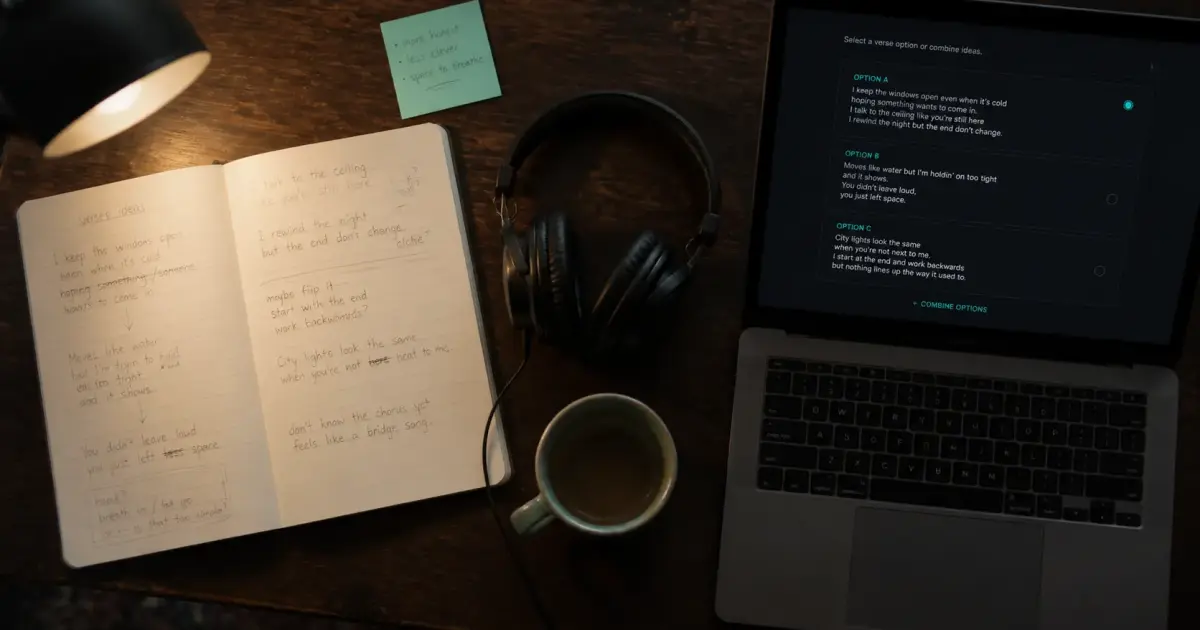
Writing song lyrics is easier when you stop trying to write the perfect line first. Start with one idea, shape it into a song structure, and use AI to create options you can edit.
AI can help when you are staring at an empty page. It can suggest rhymes, draft a verse, or give you five chorus directions when you only have one messy idea. You still have to decide what sounds true and what sounds fake.
The workflow below keeps the AI useful without letting it flatten your song into something anyone could have written.
Already have a song idea? Try the AI Lyrics Generator, then use this guide to polish the draft.
7 steps to write your first lyrics with AI
Start small. One idea, one mood, one structure. That is enough for a first draft.
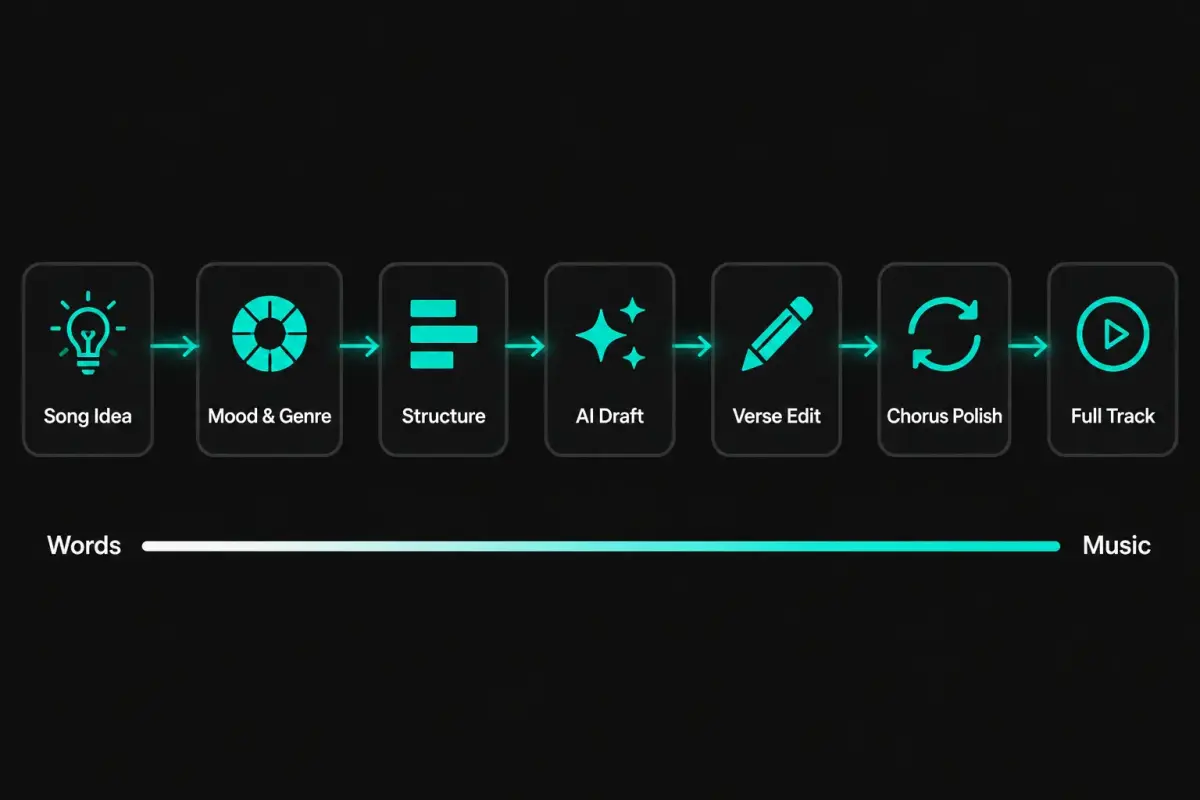
Start with one clear song idea
Do not begin with a full story. Begin with one sentence.
Examples:
- A song about missing someone but pretending you are fine.
- A late-night drive after a breakup.
- A creator chasing a dream while everyone doubts them.
- A summer song about wanting one more night before everything changes.
Good lyrics usually know what they are about. If your idea has five different themes, the song will feel scattered.
Choose the mood, genre, and point of view
Before using AI, decide three things:
- Mood: sad, hopeful, angry, nostalgic, confident, romantic.
- Genre: pop, rap, country, indie, rock, R&B, lo-fi.
- Point of view: first person, second person, or storytelling.
This helps the AI understand what you want. "Write lyrics about love" is too broad. "Write a nostalgic indie pop song from the point of view of someone driving past their old apartment" is much easier to shape.
Pick a simple song structure
For beginners, use this structure:
Verse 1
Chorus
Verse 2
Chorus
Bridge
Final Chorus
This works because each part has a job. The verses explain the story. The chorus repeats the main feeling. The bridge adds a turn before the final chorus.
Generate a first draft with AI
Ask AI for a draft, not a finished song. Your prompt should include topic, mood, genre, structure, and any lines you already like.
Example prompt:
Write song lyrics about missing someone but pretending to be fine. Make it emotional but not dramatic. Use an indie pop style, first-person point of view, and this structure: verse 1, chorus, verse 2, chorus, bridge, final chorus. Keep the language simple and specific.Rewrite the verse for detail
AI often writes general lines like "I feel lost inside" or "my heart is broken." Replace those with something the listener can picture.
Weak:
I feel so empty without you here.Stronger:
Your coffee cup is still by the sink.The second line works better because it shows the feeling instead of explaining it.
Make the chorus easy to remember
The chorus should say the thing the rest of the song keeps circling around. It should be easy to say, easy to repeat, and clear enough that a listener understands the song after hearing it once.
Ask AI for five chorus options, then choose the clearest one. Do not choose the most complicated line. Choose the line someone might remember.
Turn the lyrics into a full song
Once the lyrics feel focused, use them as the starting point for music. Add genre, mood, tempo, and vocal direction so the song generator knows how the lyrics should feel.
Already have lyrics? Turn them into a full AI song with PlayItOut.
What makes good song lyrics?
Good lyrics usually do two things well: they say something simple, then make it feel real with details.
A clear emotion
If the song is about regret, let the verses show different sides of that regret. One verse can be angry, another can be quiet, but they should still feel like they belong to the same song.
Use specific images, not generic lines
Specific images make lyrics feel human.
Generic:
I miss the way we used to be.Specific:
Your jacket still hangs by the door.The specific line gives the listener a scene.
Write a chorus around one main idea
The chorus is the part most people remember. If the verse tells the story, the chorus tells the truth.
Make every line singable
Lyrics are meant to be heard. Read every line out loud. If a line is hard to say, it will probably be hard to sing. Shorter words often work better than clever words.
Song structure: verse, chorus, and bridge
Without structure, lyrics can turn into one long paragraph. Verse, chorus, and bridge keep the listener oriented.
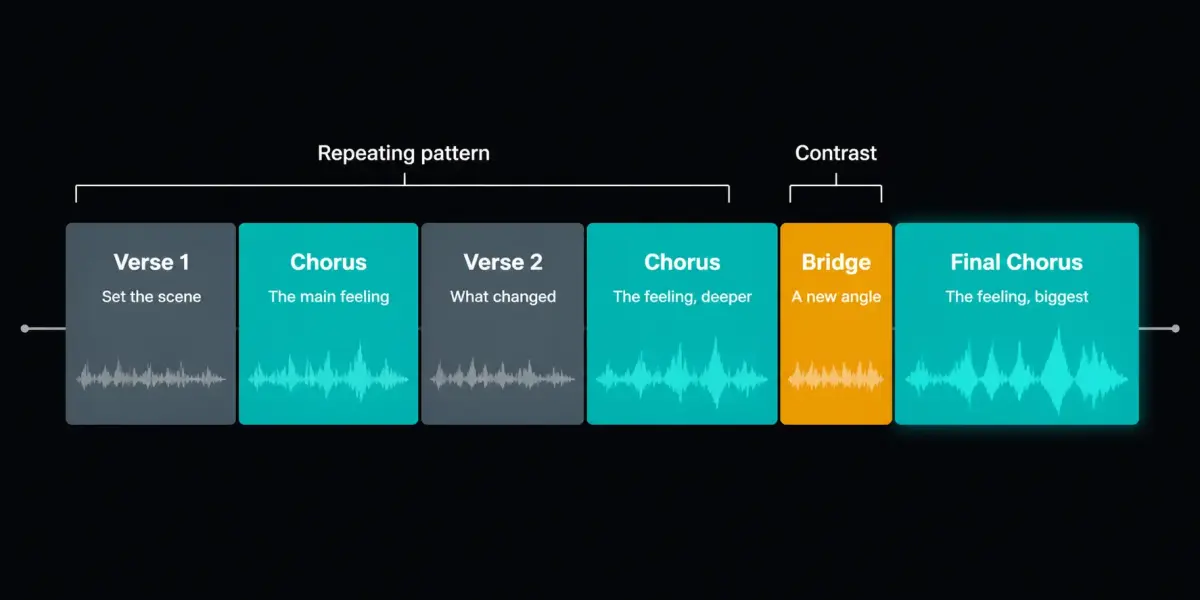
Verse
The verse gives the listener details. Use it to set the scene, explain what happened, or show a change in the story.
Chorus
The chorus repeats the main emotional idea. It should be simple, memorable, and strong enough to return several times.
Bridge
The bridge gives the song a new angle. It might reveal a decision, a regret, or a change in perspective.
Example structure
Use this if you are not sure where to start:
Verse 1: What happened
Chorus: How it feels
Verse 2: What changed
Chorus: How it feels now
Bridge: What you finally realize
Final Chorus: The same feeling, but bigger
AI lyrics prompts for every genre
Use these prompts as starting points, not final answers. Change the topic, mood, and genre before you run them.
Prompt for pop lyrics
Write pop song lyrics about [topic]. Make the mood [mood], the voice [point of view], and the language simple and emotional. Use this structure: verse 1, chorus, verse 2, chorus, bridge, final chorus. Make the chorus catchy and easy to repeat.Prompt for rap lyrics
Write rap lyrics about [topic]. Use a [style] flow, strong internal rhymes, and vivid images. Include a verse, hook, second verse, and final hook. Keep the tone [tone] and avoid copying any real artist.Need rap bars instead of a full pop structure? Use the Rap Lyrics Generator.
Prompt for sad or emotional lyrics
Write emotional song lyrics about [topic]. Make the feeling honest but not overly dramatic. Use specific details instead of generic heartbreak lines. Include a verse, chorus, second verse, bridge, and final chorus.Prompt for YouTube or background music lyrics
Write light, simple lyrics for a simple background song about [topic]. Keep the tone clean, positive, and creator-friendly. Avoid brand names, copyrighted references, and complicated imagery.Example: from idea to song lyrics
Here is a simple example of how an idea becomes lyrics with AI.
Step 1: The raw idea
A song about missing someone after moving to a new city.Step 2: The AI prompt
Write indie pop lyrics about missing someone after moving to a new city. Use first-person point of view. Make the mood nostalgic but hopeful. Use this structure: verse 1, chorus, verse 2, chorus, bridge, final chorus. Use simple language and specific images.Step 3: The first draft
The first draft may give you useful pieces, but it will probably include some vague lines. Keep the lines that create a clear scene. Rewrite the rest.
Step 4: The human rewrite
Use this editing rule:
If the line explains a feeling, try replacing it with an image.Instead of:
I feel alone in this city.Try:
I learned the subway by myself.That line still shows loneliness, but it feels more like a real moment.
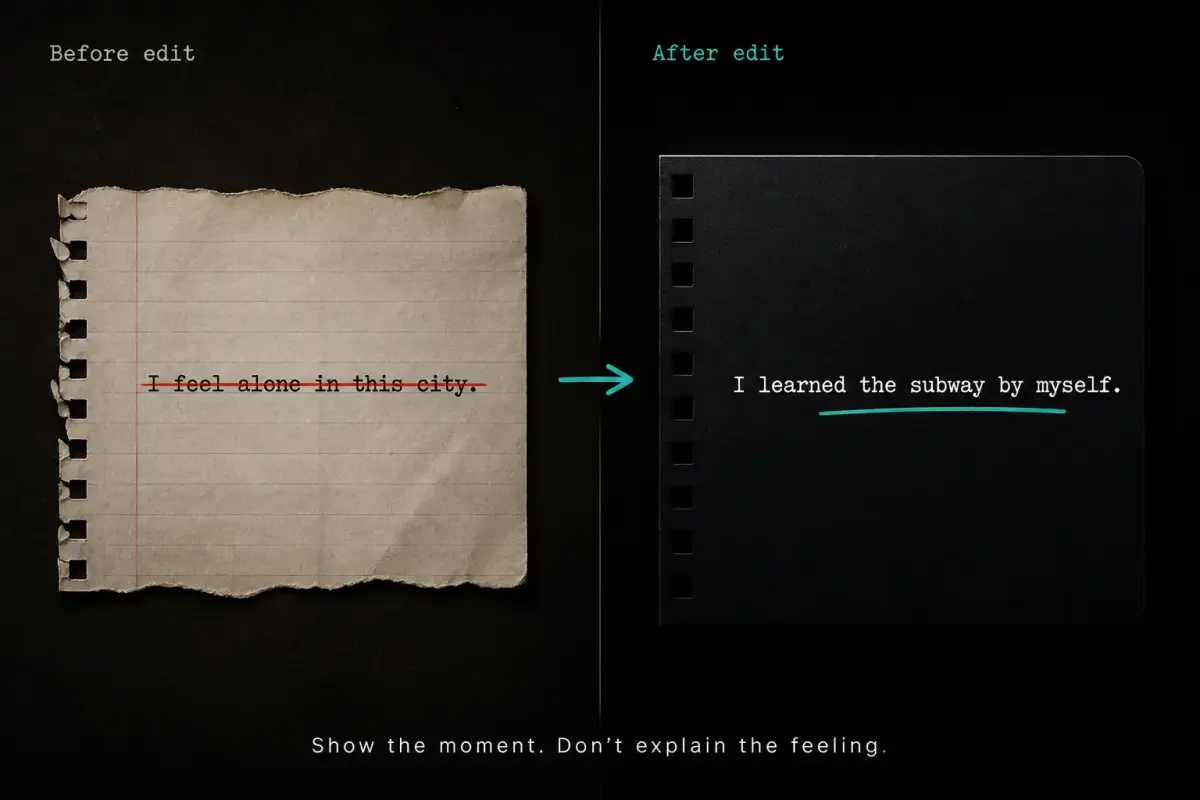
How to edit AI lyrics so they sound human
AI lyrics often describe feelings when they should show a moment. The edit is usually where the useful line appears.
Remove vague lines
Cut lines like:
- I am broken inside.
- I cannot breathe without you.
- My heart is lost forever.
These lines can work in some songs, but they are often too familiar. Replace them with details only this song would say.
Add personal details
Add places, objects, times, habits, and small memories.
Examples:
- the last train home
- your blue sweater
- 2 a.m. voice notes
- the kitchen light
- rain on the windshield
Details make the song feel like yours.
Fix repeated phrases
AI may repeat the same idea in every section. Keep the chorus repetitive, but make the verses move forward.
Read the lyrics out loud
If a line sounds stiff when spoken, it will usually sound stiff when sung. Read the full song out loud before generating music.
How to turn your lyrics into a song
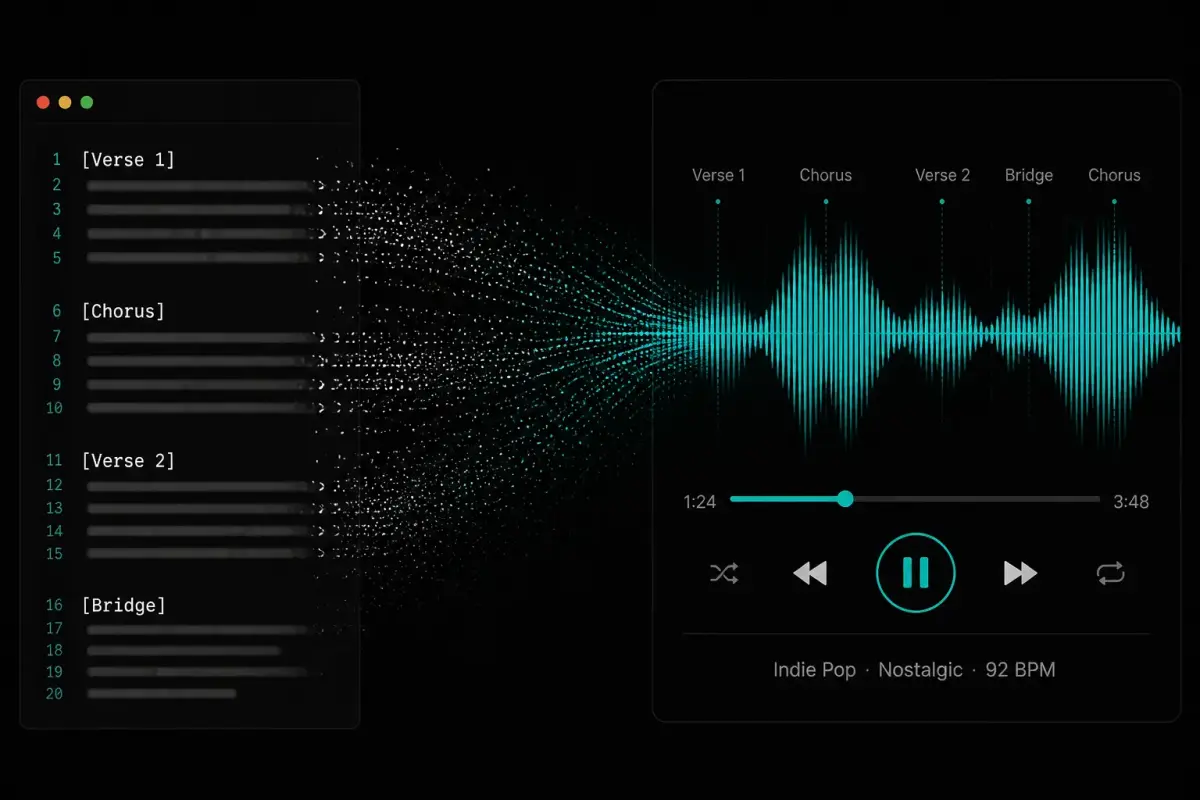
After you finish the lyrics, the next step is to turn them into music. This is where PlayItOut comes in: you can use the lyrics as your prompt and describe the sound you want.
If the lyrics are meant for someone specific, start with personalized song gift ideas, then use the personalized song gift generator to turn the story and words into a custom song.
Use your lyrics as the prompt
Paste the finished lyrics into the music generator. Keep the structure labels if they help:
[Verse 1]
[Chorus]
[Verse 2]
[Bridge]
Choose a genre and mood
Add a short music direction:
Indie pop, nostalgic, warm vocals, steady drums, hopeful final chorus.This tells the generator how the lyrics should feel.
Generate music from the finished lyrics
The first version probably will not be final. That is fine. It tells you whether the mood is close, the vocal direction works, and the chorus feels big enough.
Write the lyrics first, then play them out as a complete track.
FAQ
Can AI write good song lyrics?
Yes. AI is good at giving you a rough draft, rhyme ideas, and different chorus options to choose from. But the draft almost always needs human editing to feel personal.
Are AI-generated lyrics original?
AI-generated lyrics can be original, but you should still review and edit them. Do not tell it to "write like Drake" or copy a specific song. Keep the prompt about your own idea.
Can I use AI lyrics commercially?
It depends on which tool you use. With PlayItOut, check your plan's usage rights before publishing or selling a track.
How do I start writing song lyrics if I've never done it before?
Start with one idea, choose a simple verse-chorus structure, generate a draft, then rewrite vague lines with specific images. Do not try to write a perfect song in one pass.
How do I make AI lyrics sound less generic?
Remove broad emotional lines, add specific details, simplify stiff phrases, and read the lyrics out loud. Human editing is what makes AI lyrics feel personal.
Can I turn AI lyrics into a full song?
Yes. Once your lyrics are ready, you can use a music generator to add melody, vocals, and production. In PlayItOut, paste your lyrics, pick a genre and mood, and generate a track.